Orchard: Embracing the Turbulence
The Problem: The Mentorship Gap
High schoolers are expected to pick a life path before they're even allowed to rent a car. Meanwhile, career counselors are so outnumbered that most students only get a five-minute check-in once a year. The result? Kids default to "safe" or "generic" majors like Business or Marketing because they simply don't have a guiding voice to show them anything else.
Initial Hypothesis: The Content-First Strategy
Students just need a better library of high-quality content and some gamification to encourage exploring. Counselors needed a way to track progress, view trends and assign homework.
Getting Ready for Testing
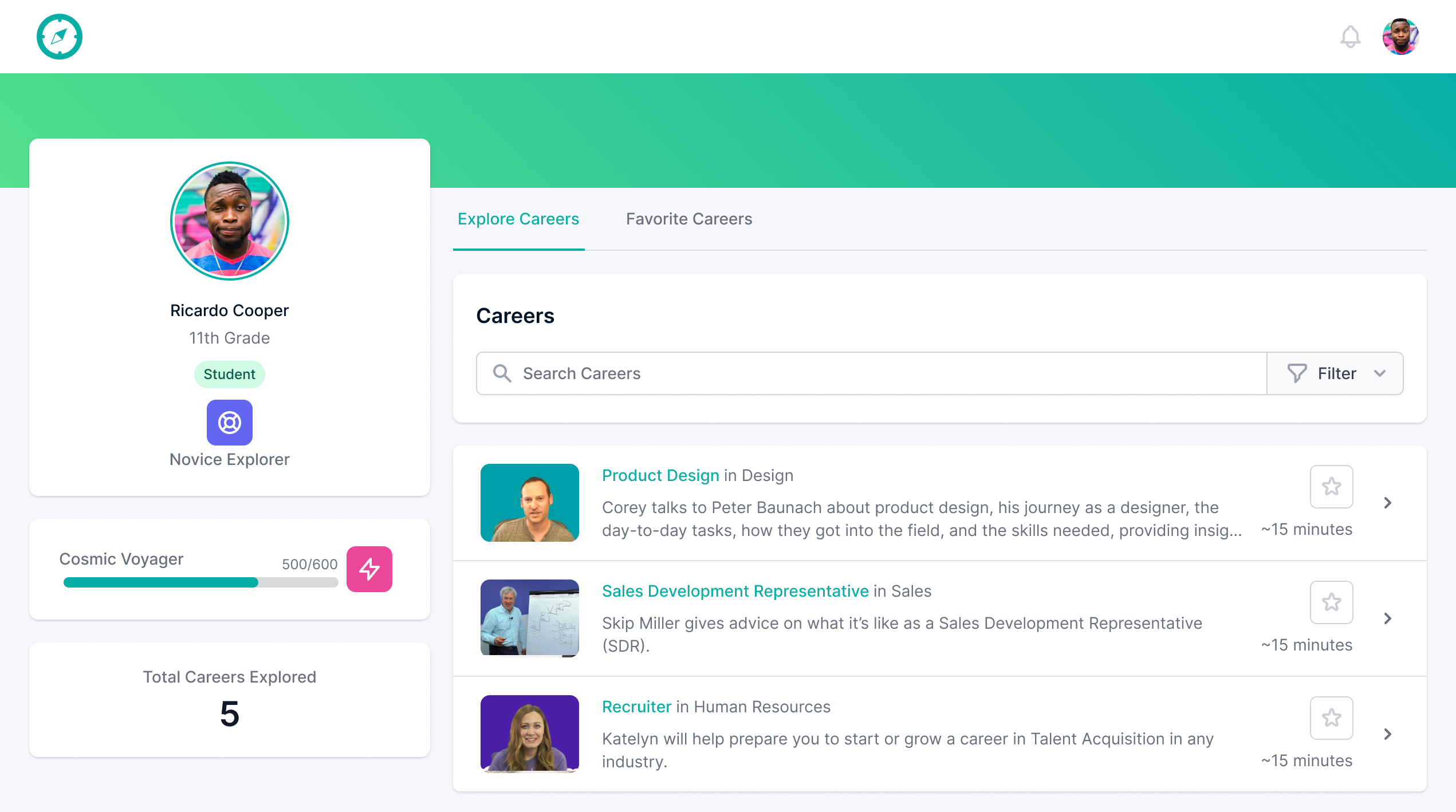
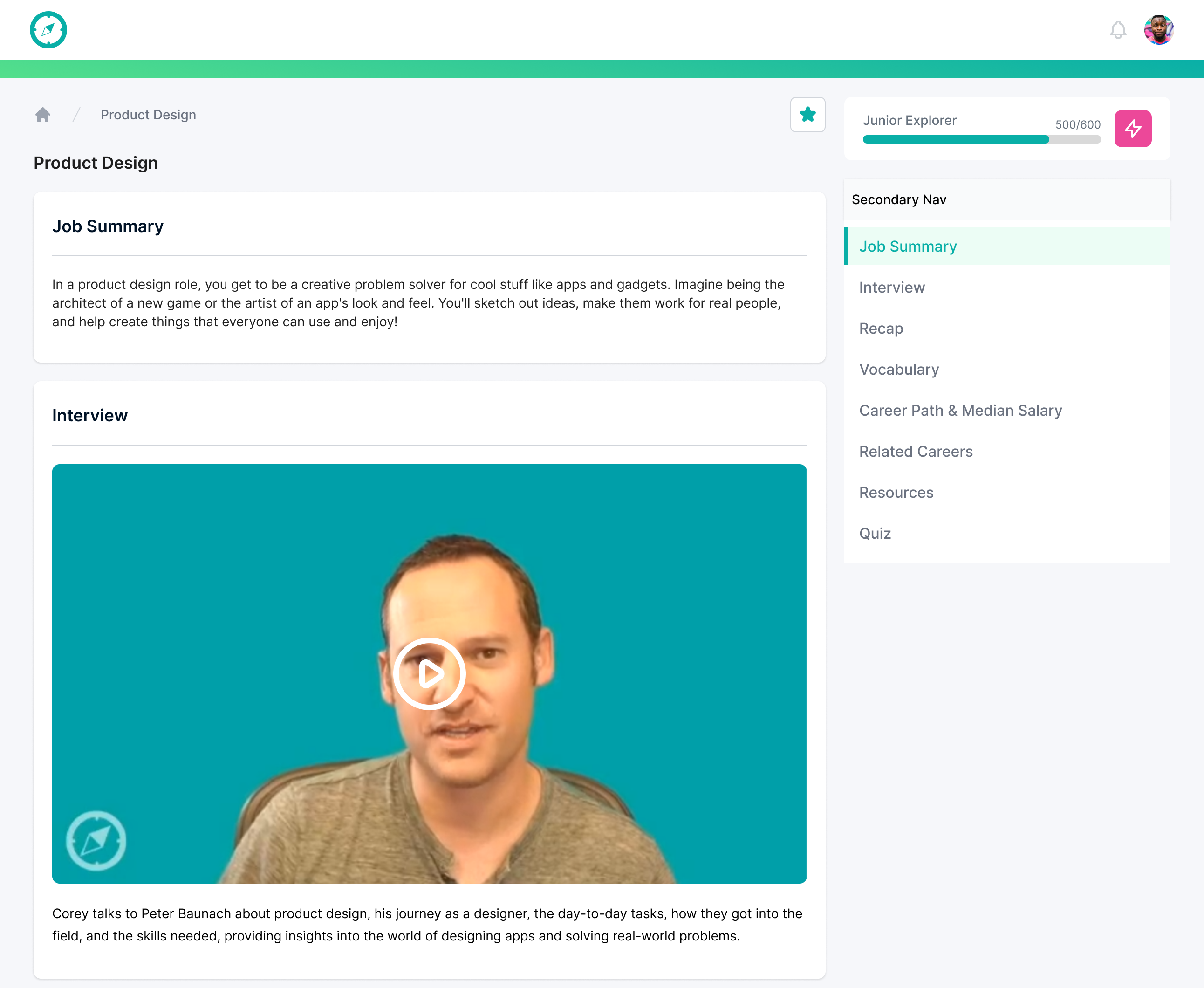
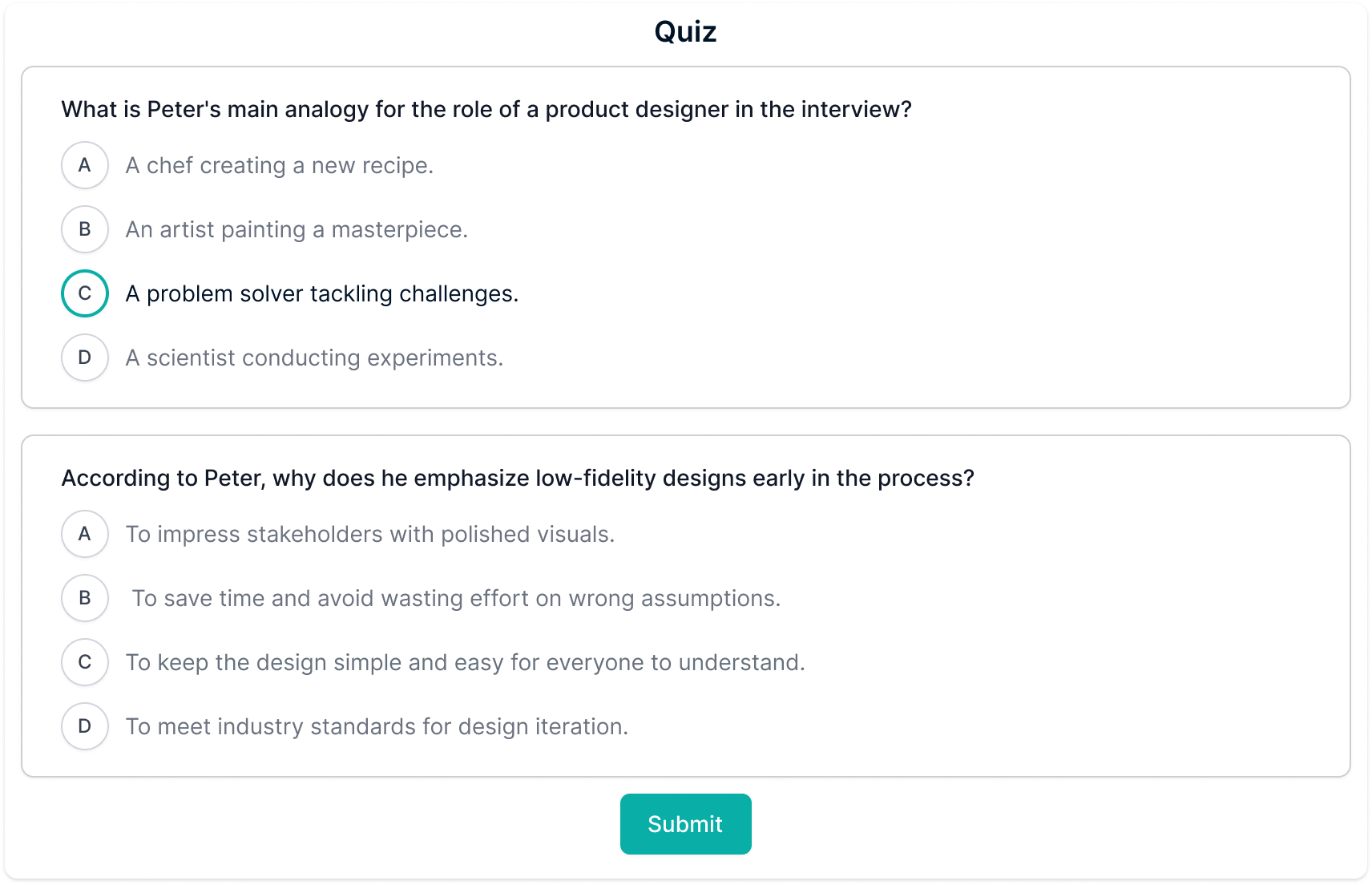
To get ready to test our hypothesis we reached out to everyone we knew and started filming our own high-quality videos, created a gamifying experience and added quizzes to prove students were watching the videos.
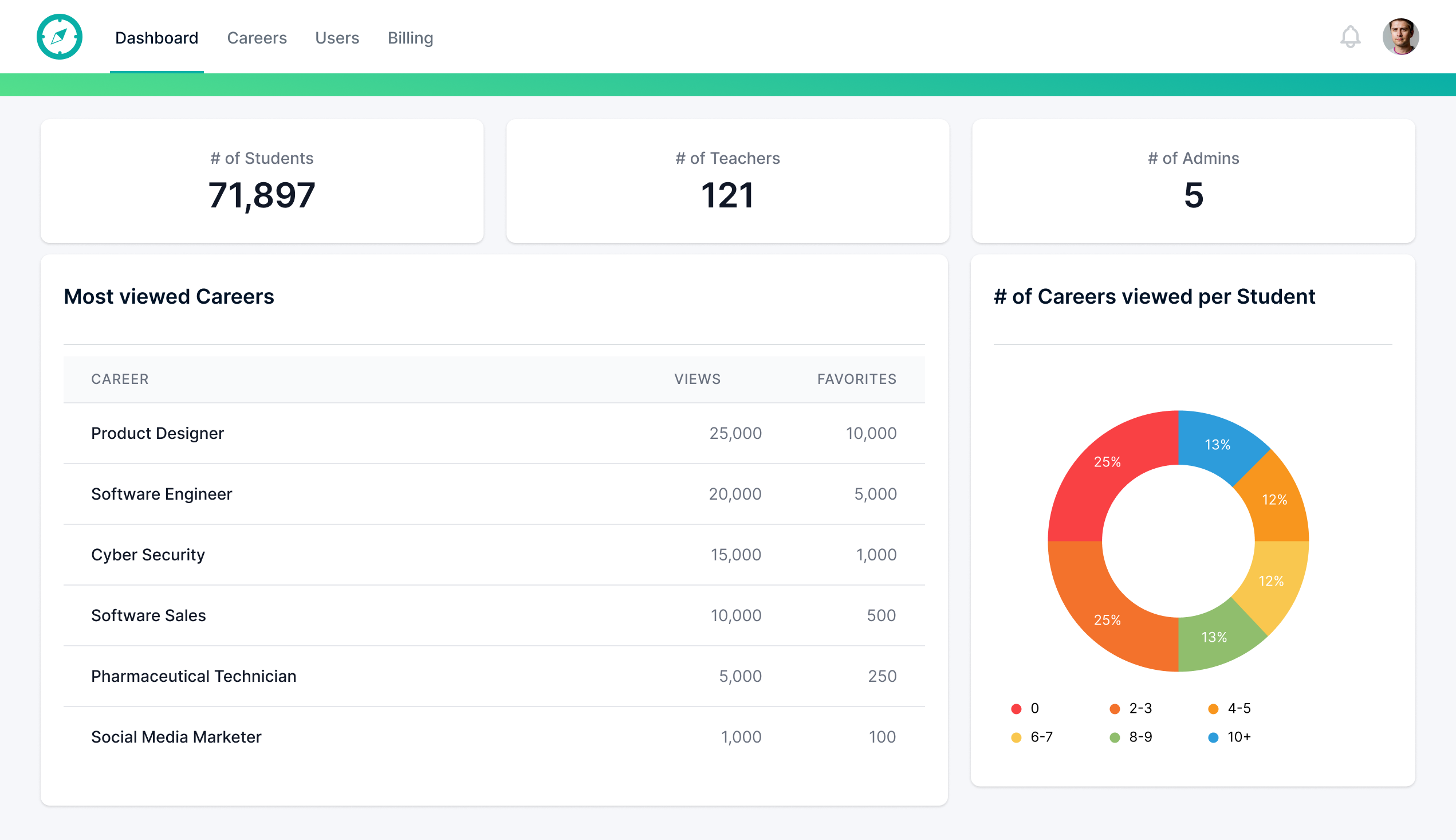
For Counselors
We designed a way to track progress and even assign "career homework" to their students.
Evaluating the Hypothesis: A Reality Check
We took our first iteration into user research expecting to validate our "database and dashboard" model. Instead, we found a stark divide between what we thought people needed and how they actually behaved, and the feedback was humbling.
- The "Search Bar" Bias: Students didn't "explore" because they didn't know what to ask. They defaulted to the same three careers they'd seen on TV, leaving the rest of our database untouched.
- The Quiz Friction: We thought gamified quizzes would prove learning, but students saw them as "just more schoolwork" and disengaged immediately.
- Dashboard Fatigue: Counselors were already drowning in administrative tools. The last thing they wanted was another system to log into; they needed a way to make their rare 1-on-1 time more effective.
The Signal in the Noise: The Power of Video
While the search bar was a ghost town, the video player was a lighthouse.
- Attention as a Metric: We noticed that even if students ignored the text and the quizzes, they would engage with the career interviews.
- Visual Authenticity: They weren't just looking for data; they were looking for a "vibe." Seeing a real person in their real work environment humanized the careers in a way a salary table never could.
- The "Scroll" Instinct: Students would fast-forward through long-form videos to find specific moments of interest, signaling that they wanted high-density information delivered in short, punchy bursts.
A Shift in Focus: Prioritizing an Exploratory Experience
With the research in hand, it was time for a reset. We realized that to provide real value, we needed to move beyond a traditional management-style dashboard and evolve into a true discovery platform. This shift was driven by the observation that students often felt stuck at the search bar: when they didn't know what to ask, they didn't ask anything. By prioritizing an exploratory experience over a search-heavy one, we created a path for students to discover opportunities they didn't even know existed.
The Hook
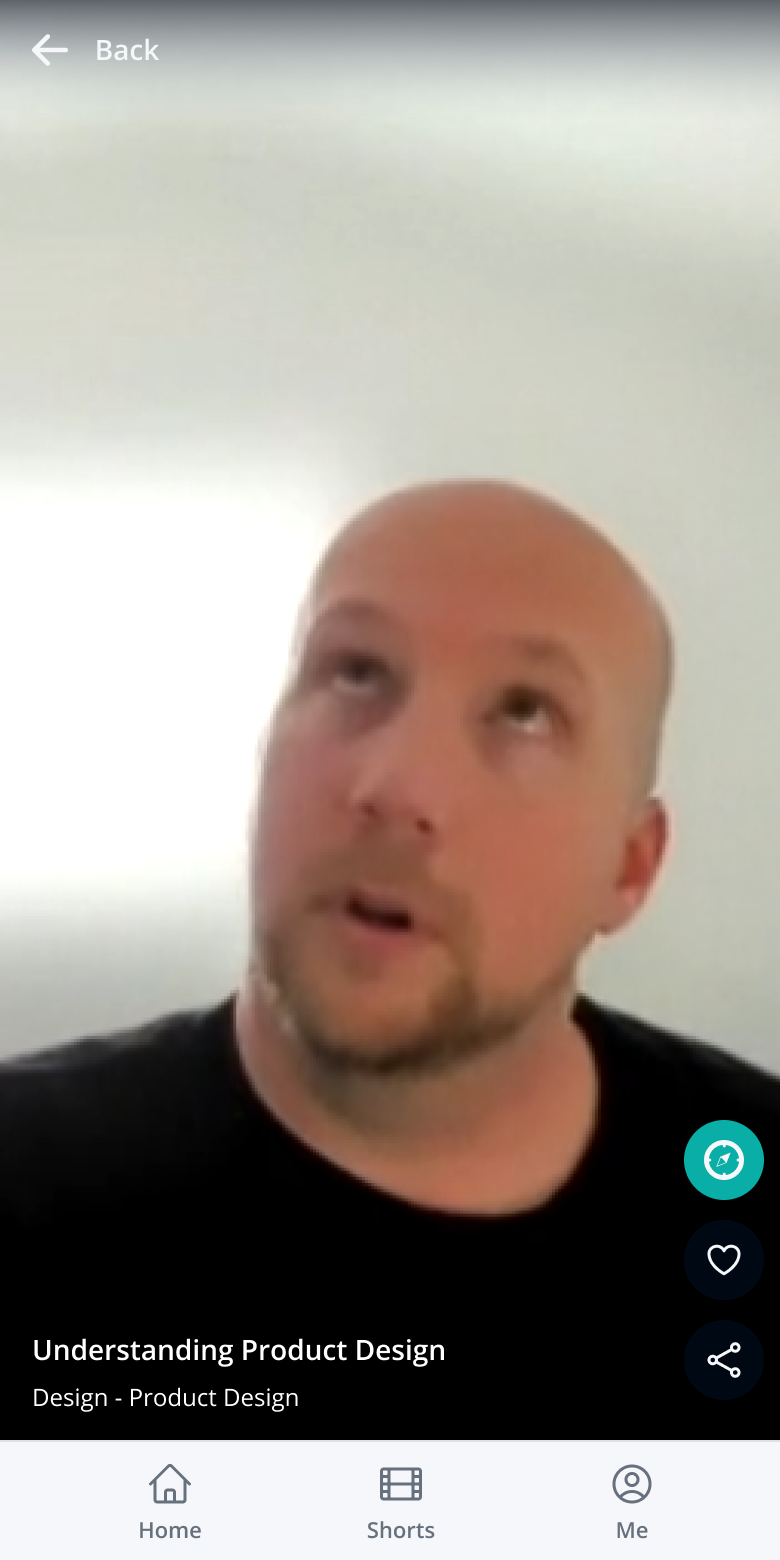
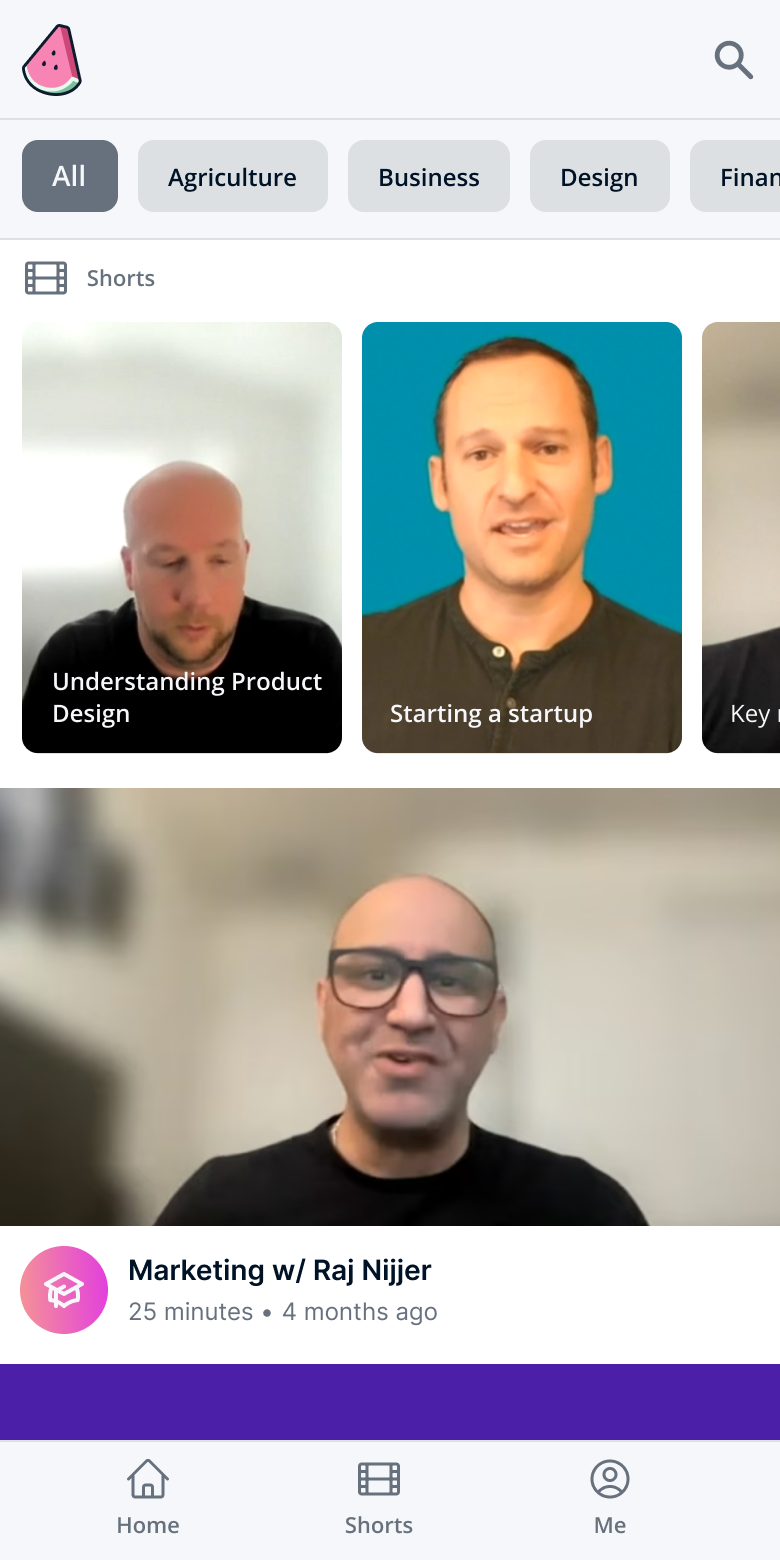
We cut our long-form interviews into 30-second "teasers" that focused on the most interesting parts of a job, the "Day in the Life" moments.
Emergent Exploration
By mimicking the social media patterns students already used, we saw "accidental discovery" happen. A student might scroll for a "Business" clip but stop on a "Product Designer" video because the thumbnail grabbed them.
The Feed Model
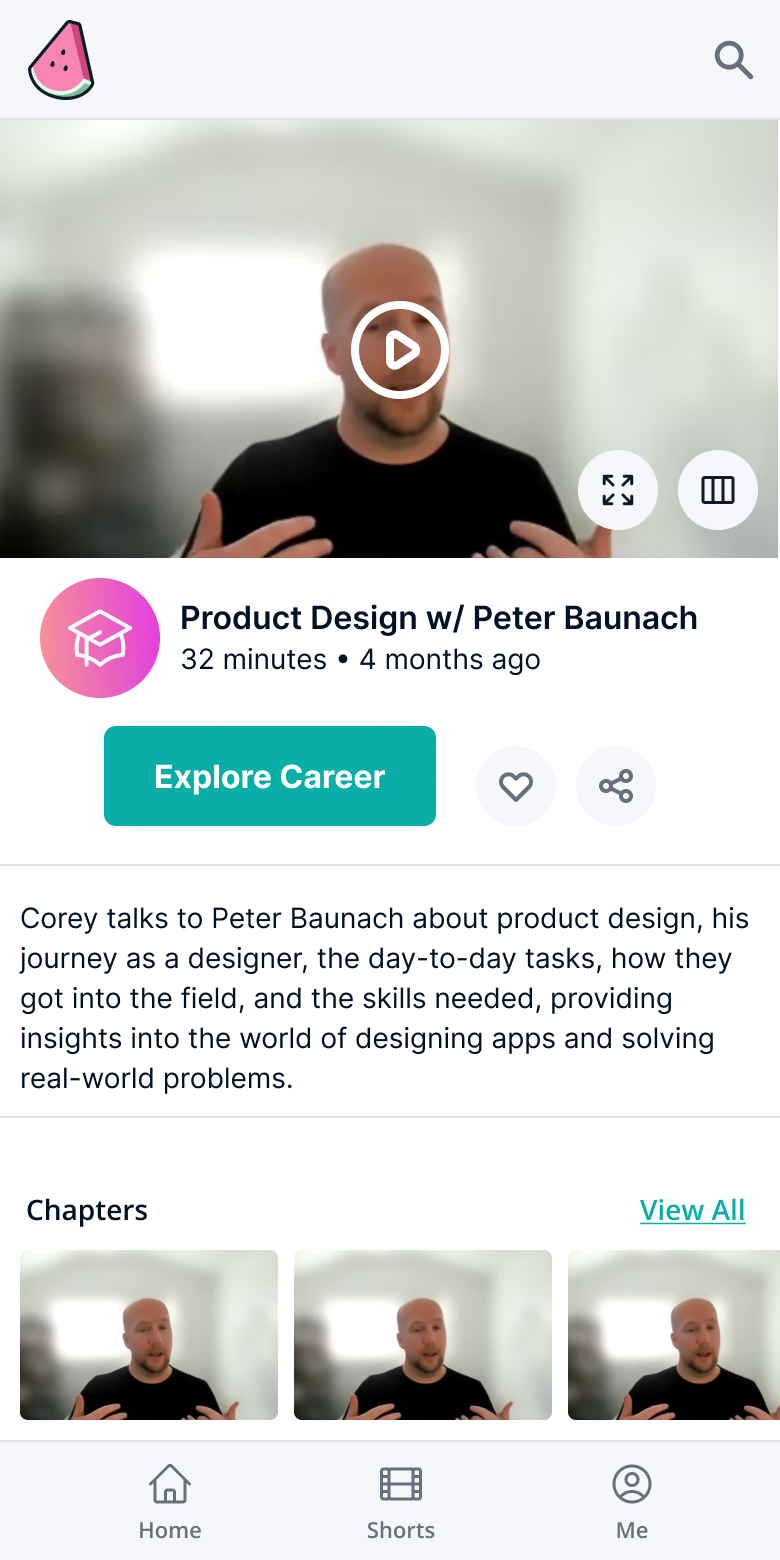
We replaced the traditional search based layout with a mobile-first, scrollable feed of short-form video clips.
For Counselors: We Switched Our Intent
We realized a dashboard was just another system for counselors to manage, so we shifted our intent from managing to a conversation. By helping students build a personalized career plan before their five-minute check-in, our goal was to turn a forgettable touchpoint into a high-value conversation.
Testing: Round Two
With a solid proof-of-concept in hand, it was time to push the product further. We integrated analytics and launched to a list of ~20,000 educators. Even though they weren't our primary demographic, watching them interact unassisted provided the kind of “raw” data you just can't get in a lab. For the next two weeks, our morning ritual was analyzing session recordings, letting us see exactly where users thrived and where they stumbled.
We had finally found our "signal." The short-form video feed was working, people were exploring, and we felt like we had a handle on the discovery problem.
Unexpected Turbulence: The ChatGPT Shift
Seemingly out of nowhere, ChatGPT was released and the world was flooded with AI apps. Most of them felt like dense, academic text blocks that used a lot of verbose "AI lingo" to say very little. It was a technology looking for a problem, and for a moment, it felt like the quiet, human-centric "mentorship" vibe we were building was at risk of being drowned out by the noise.
Checking the Compass
Instead of just "adding a chatbot" because it was the trend, we took a step back to review our original mission. We asked ourselves a hard question: In a world where everyone has an LLM in their pocket, is our problem statement still valid? The answer was a resounding yes.
- The Reality: The counselor-to-student ratio hadn't changed.
- The Complexity: The job market was actually becoming more confusing because of AI.
- The Opportunity: We realized that while generic AI was verbose and cold, a guided AI, fed by our specific career data and human-centric philosophy, could be the "Counselor-in-Pocket" we had been trying to build all along.
Aligning the Tech to the Mission
We realized LLM technology was the perfect way to make our vision of a 24/7 career counselor a reality. Our approach was simple: the AI exists to guide students and answer their questions as they build their own post-high school career plans. We made a strategic decision that the technology should never automatically assign a 'perfect career' based on an assessment. Instead, it serves as a supportive partner, keeping the student in the driver's seat of their own future.
The North Star: A Living Mentor in Every Pocket
We moved beyond a simple discovery platform to create a truly guided experience. Our goal was to turn our passive video library into a proactive mentor that walks with students from their first spark of curiosity all the way to a concrete and trackable future. By adding contextual mentorship, we used AI to bridge the gap between exploring careers and understanding exactly how to achieve a goal. This transforms every piece of content into a deliberate stepping stone, turning a library of information into an active roadmap toward a real-world career.
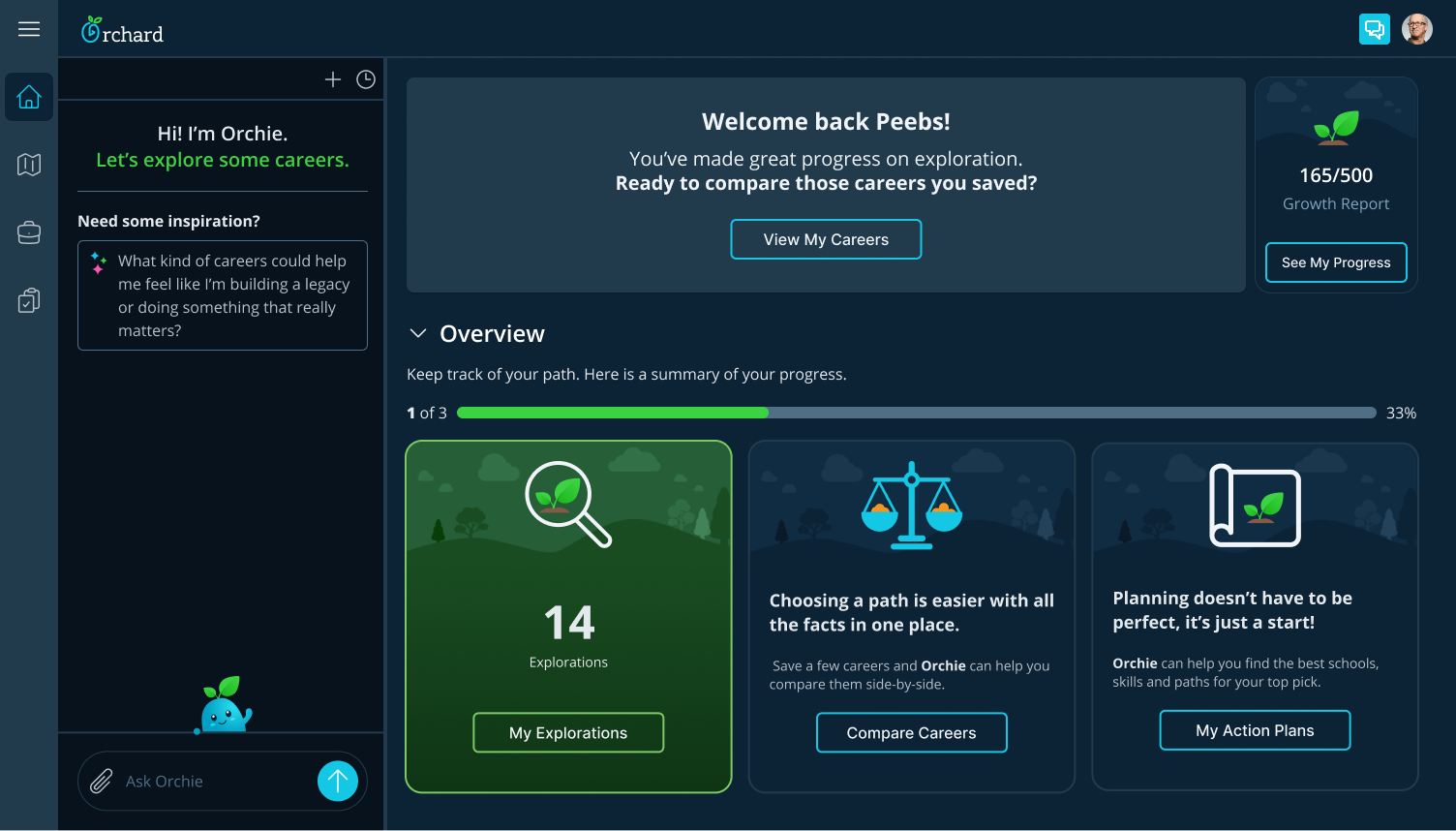
Enter "Orchie": The Digital Counselor
We designed Orchie to serve as a digital counselor that moves beyond the limitations of a standard search bar. Instead of just regurgitating data, Orchie uses conversational context to help students articulate their interests and move past generic labels like 'Business' into specific, meaningful career trajectories. This shift ensures the AI isn't just an information retrieval tool, but a proactive partner that asks the right questions to help a student refine their own vision and discover a path that truly resonates with them.
The Compare Engine
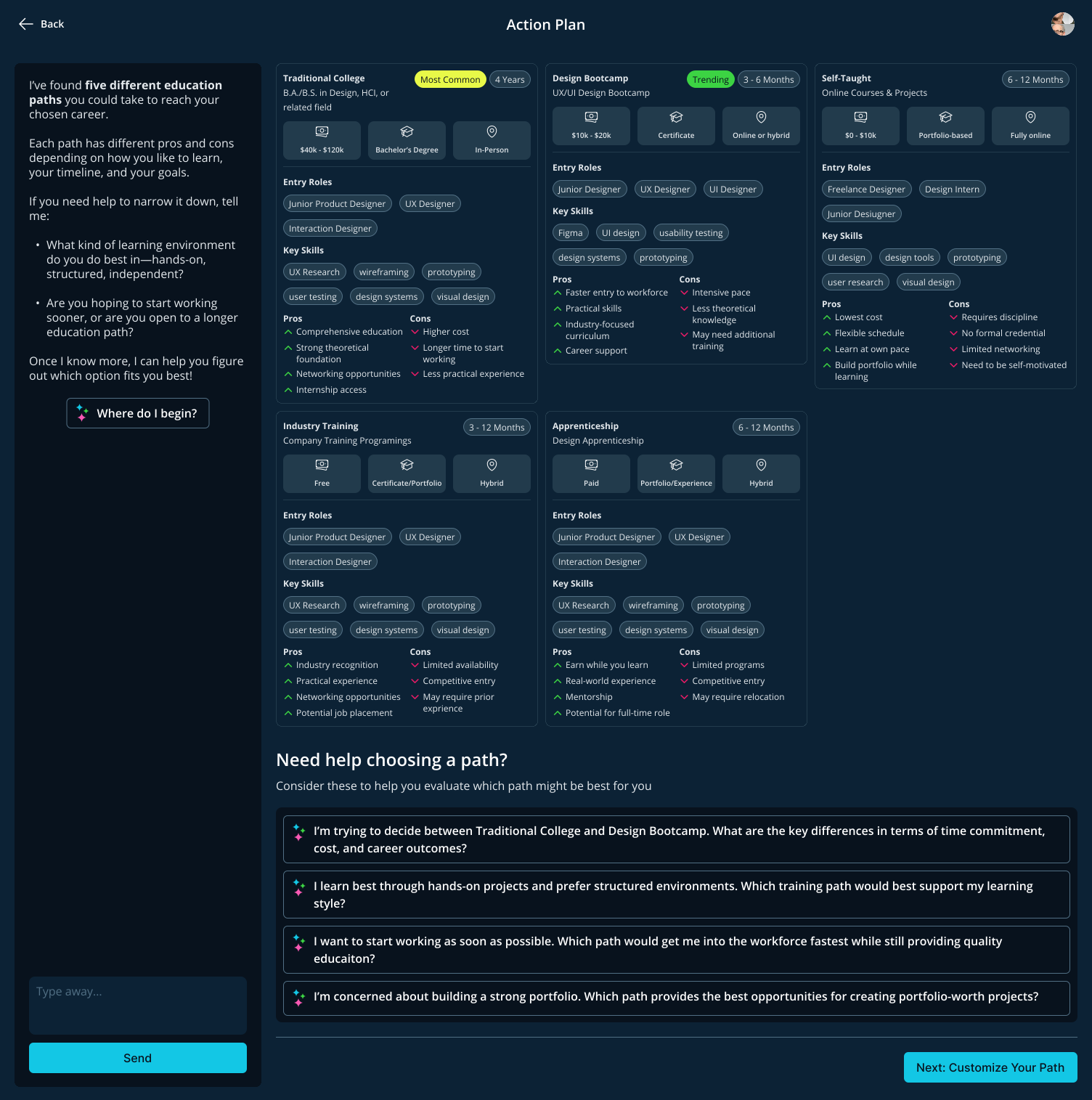
We architected a UI that allows students to weigh multiple paths side-by-side. Whether it's a 4-year degree, a trade apprenticeship, or a self-paced bootcamp, we give every option equal visual weight to ensure students make an informed, accessible choice.
The Dynamic Roadmap
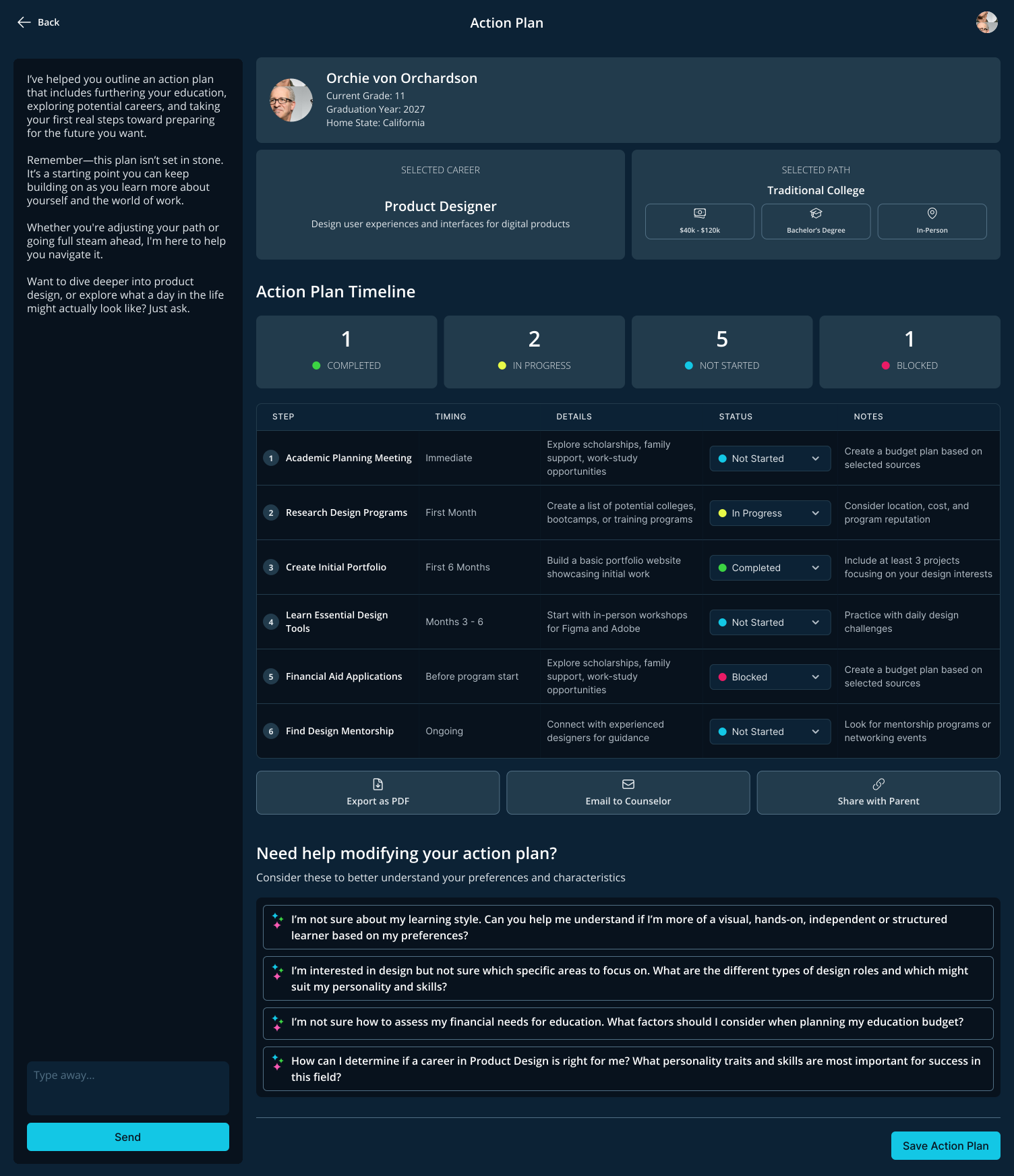
We designed a living "Action Plan" that breaks down terrifying life goals into small, manageable milestones.
The Ability to Evolve
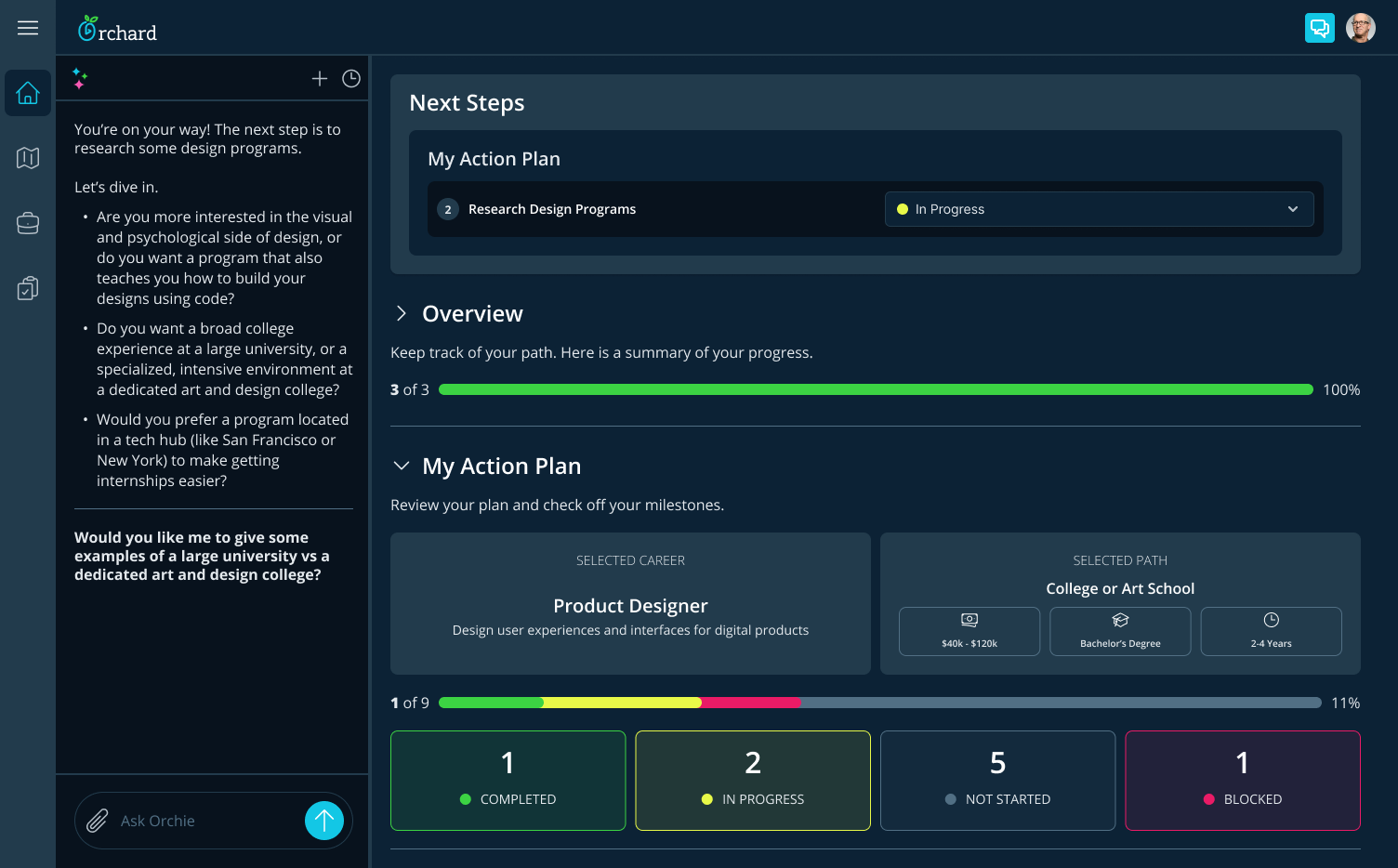
Because high schoolers change their minds, the roadmap is modular. If a student hits a milestone and realizes they want to pivot, Orchie recalibrates the plan in real-time, removing the "failure" stigma of changing paths.
The Technical Edge: High-Fidelity as the "Source of Truth"
Because we were moving into uncharted territory with AI-led UX, static mockups weren't enough. I pivoted our entire workflow to AI-assisted high-fidelity prototyping.
Building in Cursor.ai
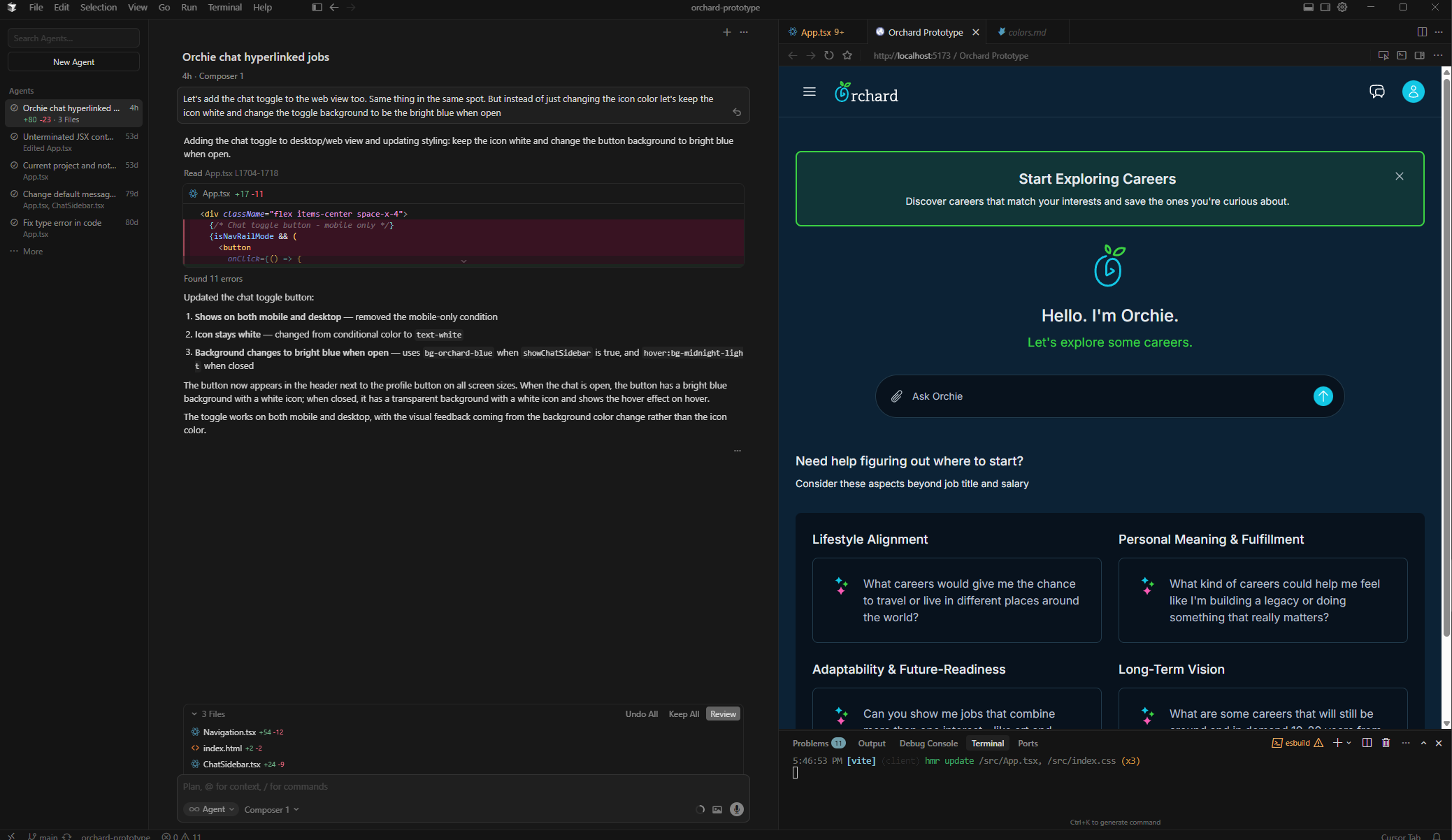
Using Cursor and Tailwind, I bypassed traditional handoffs and built functional components that served as the production-ready source of truth for our CEO and CTO.
Testing Logic, Not Pixels
This allowed us to put a working version of Orchie in front of students and counselors immediately. We could see exactly where the conversational logic broke and fix it in the code, rather than just guessing in a design tool.
Impact & Final Learnings
The Outcome: Moving from Idea to Classroom
What started as a way to close the Mentorship Gap has grown into a tool that actually changes how students see their future. We've moved beyond the "is this cool?" phase and are now seeing Orchard used in actual classrooms to help kids turn "I don't know" into a clear, personalized roadmap.
- Validation at Scale: We are now presenting at the state and district levels, with academic leaders putting Orchard on their formal agendas for discussion.
- Classroom Momentum: The true "North Star" moment was seeing students in actual classrooms use Orchie to move past "I don't know" and into a state of "I have a plan I'm excited about."
- Operational Efficiency: By using an AI-assisted, high-fidelity workflow, we successfully narrowed the gap between design and production, allowing us to iterate on complex logic in days rather than months.
What I Learned (and Unlearned)
- The "Mentor" beats the "Manager": I learned that counselors don't need another management system; they need a student who walks in the door with a sense of purpose and a prepared action plan.
- Getting Out of Your Own Way: Admitting that my original counselor dashboard was a barrier, not a bridge, was a huge turning point and got us focusing on the right problem.
- AI is a UX Problem, Not Just a Tech Problem: LLMs are powerful, but without the right multimodal wrapper (like our short-form video feed) and a living roadmap, they are just another overwhelming text box.
- Accessibility is a Competitive Advantage: By designing for a wide range of educational paths, including apprenticeships and trades, we built a more resilient product that resonates with a far larger demographic of students and state leaders.
My Role
Product Design and Strategy
My Contributions
- Stakeholder Alignment: Navigated shifting requirements and complex technical constraints to maintain a unified product vision across cross-functional teams.
- Strategic Leadership: Led the critical pivot from a static database to an exploratory discovery platform based on deep user research and evidence.
- AI Implementation Strategy: Defined the logic and experience for the contextual mentorship engine to transform passive content into actionable career roadmaps.